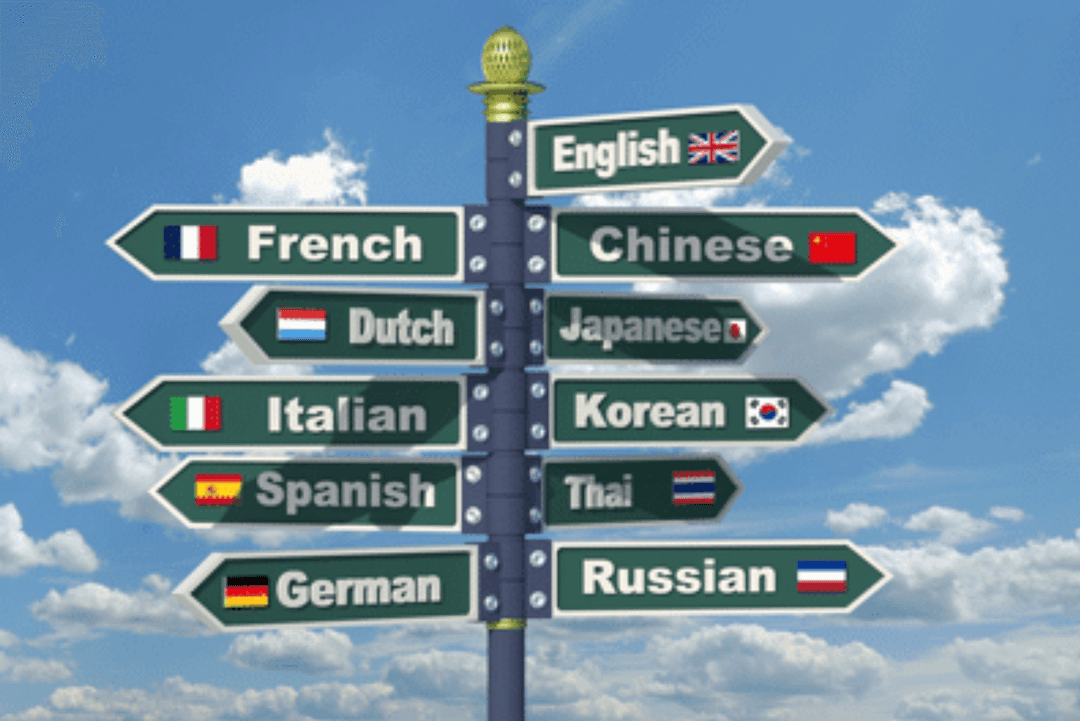
A large proportion of residents in Luxembourg speak several languages, and businesses like to promote multilingualism when they attract foreign workers.
But what is the national language of this place popular with the whole world? Which is the most talked about in administration, education or even the job market? Do you have to speak Luxembourgish to get a job? What are the sectors where proficiency in English is a key advantage? Does a person need a specific linguistic situation to work in the economic capital of Europe?
The 3 official languages of Luxembourg
Luxembourgish is the National language and is a symbol of cultural identity. However, in official exchanges, the law and the administrative part, French and German play an equally important role.
Historically, Luxembourgish derives from Francic Moselle, a Germanic dialect spoken in the region as early as the 8th century. It has developed over the centuries under the influence of French and German, integrating vocabulary and linguistic structures from these two languages.
How do we use these 3 languages today?
- Luxembourgers : mainly used in daily life and increasingly present in administration. In 2021, 61% of residents say they speak it, although its use has decreased compared to the 71% recorded in 2011 (Source: lequotidien.lu. For context, see chart below). This language is spoken in the professional world but also in schools or at home.
- frenchman : French is the dominant language in administration and the legal field. Almost all residents of Luxembourg speak the French language. The French population is the largest in terms of cross-border workers.
- Allemand : Heavily used in print media and certain economic sectors. Again, a large percentage of residents speak the German language, around 75%.
Luxembourg is the European country where the population speaks the most languages, on average 3.6 per inhabitant.
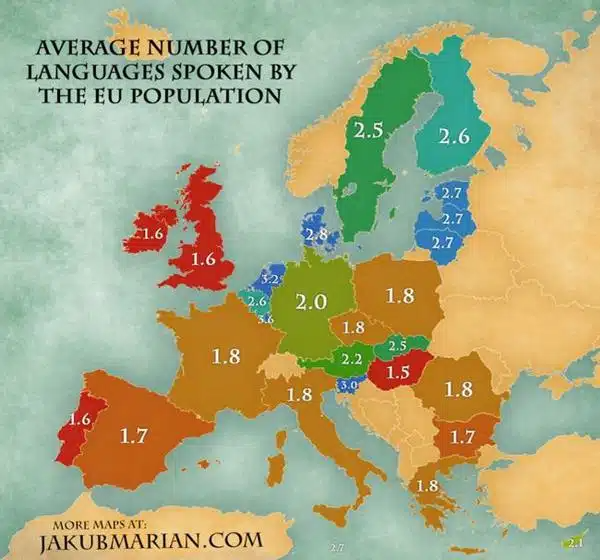
In addition to the 3 official languages, other languages from neighbouring countries are taking up more and more space in the country:
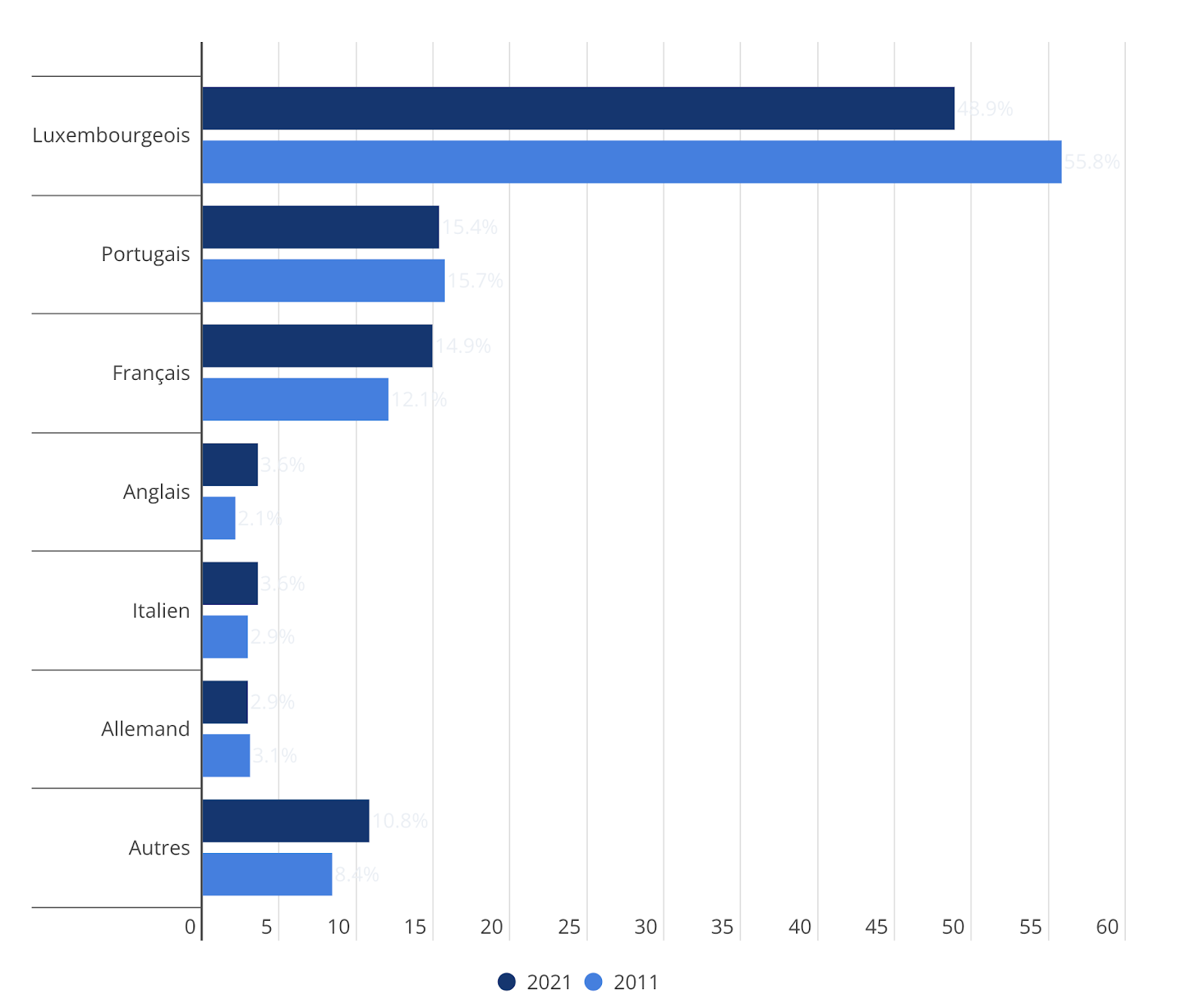
Since 2011, Luxembourgish has been the most spoken language, but Portuguese, Italian or even German are more and more present, with the number of workers of foreign origin.
The role of trilingualism in administration, education and the media
Luxembourg trilingualism is deeply rooted in all aspects of the country's daily life, whether in its administration, its education system or its media. The organization of the country works by integrating the various languages into several aspects of Luxembourg life.
Public administration
La Law of 24 February 1984 on the language regime enshrines Luxembourgish as the national language, while recognizing French and German as administrative languages. Indeed, legislative acts are generally written in French, while German and Luxembourgish are used in various administrative contexts.
For example, parliamentary debates take place mainly in Luxembourgish, which reflects its central role in political life. Citizens can interact with the administration in the language of their choice among the three official languages.
Education
The Luxembourg education system is designed to develop multilingualism from an early age. Basic education begins with Luxembourgish as the main language, serving as a basis for literacy.
From cycle 2, German is introduced as the language of instruction, followed by French in cycle 3. Students are then equipped with a solid command of the three languages. In 2015, 59% of lower secondary students learn at least two languages at school, which illustrates the importance of multilingualism in the educational process. Today, Luxembourgers speak an average of 3.6 languages: a good performance.
Media
Luxembourg's linguistic diversity is also reflected in the media. The newspapers are mostly written in German, which provides extensive coverage of national and international news. 80% of television and radio broadcast in Luxembourgish, in order to reinforce its daily use and its presence in popular culture. French is also present, especially in some publications and programs, and has a key role in communication and business.
Trilingualism in Luxembourg is an essential characteristic which influences and enriches all areas of society, from administration to education to the media, to create a multilingual and inclusive environment.
Languages and the job market in Luxembourg
The most requested languages by sector of activity
The Luxembourg job market is strongly influenced by the linguistic diversity of the country. Some sectors prefer one language over another, depending on their customers and their international partners.
- Banking and financial sector : English is essential because of the numerous international relationships
- Public and legal sector : French dominates in official documents and administrative exchanges
- Commerce and hotels : multilingualism is essential, with a preference for French and German
- Technology and IT sector : English is often the main working language
- Construction sector : here, many workers speak Italian, Portuguese, or French
Concrete examples of opportunities for multilinguals
Being multilingual in Luxembourg is a competitive advantage on the job market. Many companies are looking for profiles who can juggle several languages.
For example:
- An employee in a bank may be required to communicate in French with colleagues, in English with international customers and in Luxembourgish with the tax authorities.
- A server in a restaurant will have to adapt to French-speaking, German-speaking or English-speaking customers.
- An IT developer working for an international start-up will use English for the most part while interacting with administrations in French.
- To work in the Luxembourg government, you must speak the Luxembourgish language.
Testimonies
If there is one thing in common in Luxembourg, it is this: everyone knows that speaking several languages is a very important characteristic in the Grand Duchy, given the number of nationalities present in the region.
Mélanie, Policy Manager at Foyer Global Health, shares her experience: For me, the most complicated thing was the language, because I did not speak French very well when I moved to Paris. I had to find a job. That was the hardest part. (testimony collected on foyerglobalhealth.com).
Tatiana, an expatriate Communication Manager in Luxembourg, highlights: Here, in Luxembourg, it's very multicultural. There is French, English, I didn't know at first what language I should speak. (testimony collected on foyerglobalhealth.com).
Integrating through languages in Luxembourg
The cultural importance of languages in daily interactions
Multilingualism is not limited to the professional world in Luxembourg. It is omnipresent in:
- daily life,
- social interactions,
- consumption habits
- the cultural identity of the residents of the region.
Understanding and using several languages is not only a professional advantage: it is a necessity to integrate into Luxembourg society.
Linguistic flexibility reflects not only the diversity of residents, but also the desire to include each individual, regardless of their native language. If you are an expatriate and know a few words in Luxembourgish, you will improve your relationship with the inhabitants and promote better social integration.
Languages play a role in local culture and traditions. Numerous popular festivals, such as Oktavmäertchen Or the Schueberfouer, are announced and celebrated in all three official languages.
Multilingualism is an identity marker in Luxembourg. Residents who speak several languages have a stronger sense of belonging to Luxembourg culture. For newcomers, it is a challenge but also an opportunity for integration.
Do not hesitate to be curious and to use the different languages to communicate better, but also to better understand the history and values of this multicultural country.
Resources for learning the languages spoken in Luxembourg
Learning a language requires time and regular practice. Fortunately, in Luxembourg, there are numerous resources to help newcomers become familiar with Luxembourgish, French and German:
Language courses
Several institutions offer language courses for expatriates and workers who want to improve their language level:
- The INL (National Institute of Languages) : INL offers Luxembourgish, French and German courses for different levels
- The University of Luxembourg : the University offers language training programs adapted to students and professionals
- Private schools and associations : some structures such as Prolingua or Berlitz offer intensive courses adapted to professional needs
Online platforms
For those who prefer to learn at their own pace, several applications and websites allow them to progress effectively:
- Duolingo and Babbel : ideal for starting with grammatical bases and essential vocabulary
- Memrise : focuses on interactive learning with videos from native speakers
- Mosalingua : recommended for memorizing key phrases used in daily life and at work
- netflix : yes, watching movies or series on a streaming platform in their original version can greatly help you learn a language
Immersion and daily practices
One of the most effective ways to learn a language is through immersion. In Luxembourg, there are several opportunities to practice actively:
- Join chat groups : many associations organize language meetings to allow expatriates to practice with native speakers
- Watch local media : do not hesitate to read Luxembourg newspapers (Wort, L'Essentiel...), listen to the radio or watch local programs to get used to the accent and common expressions
- Participate in cultural events : attending festivals or professional meetings allows you to improve your level while developing your social network. Rather interesting as a technique
Tips to improve your language level
If you had to give 5 tips to improve your language level, here is what you would say:
- Practice regularly : devote some of your time each day to learning and exposing yourself to languages
- Listen and read in the target language : watch local programs, listen to the radio, read articles in Luxembourgish, French or German or watch series on Netflix in their original version
- Interacting with native speakers : join discussion groups or chat daily with colleagues and friends
- Set goals : without putting pressure on yourself, you can define a level to reach and monitor progress (for example: learn one idea per day, know how to have a conversation within 3 months)
- Don't be afraid to make mistakes : learning happens through practice and making mistakes is a natural part of the process. You do not have to speak the language perfectly, the idea is above all to know how to hold a conversation and to have a certain fluidity
Conclusion
Luxembourg is a country where multilingualism is much more than just an asset : it is a necessity to integrate fully into professional and social life. With the Luxembourgish language, French and German as official languages, and English playing a key role in some sectors, linguistic diversity influences both the labour market and daily interactions.
For expatriates and international workers, mastering multiple languages opens up numerous opportunities and facilitates integration. Fortunately, many resources exist to make progress, whether through courses, online platforms, or immersion in local culture.
In the end, learning and using different languages in Luxembourg is a rewarding experience, which not only allows you to grow professionally, but also to better understand and appreciate the unique culture of this multicultural country.
If you are looking for a job in Luxembourg and want to find an opportunity that matches your linguistic and professional skills, AlleyesOnMe.Jobs is the ideal platform. It allows you to discover offers adapted to your profile and to connect with recruiters who value your know-how.
Frequently asked questions
What language is used the most at work in Luxembourg?
French is the most commonly used language in administration and services, while English dominates in the financial and technological sectors.
Is it necessary to speak Luxembourgish to find a job?
No, but it can be an asset depending on the field of activity. In the public sector, fluency in Luxembourgish is often required.
Is trilingualism mandatory in all sectors of activity?
No, but mastering several languages is strongly recommended to facilitate integration and increase professional opportunities.